
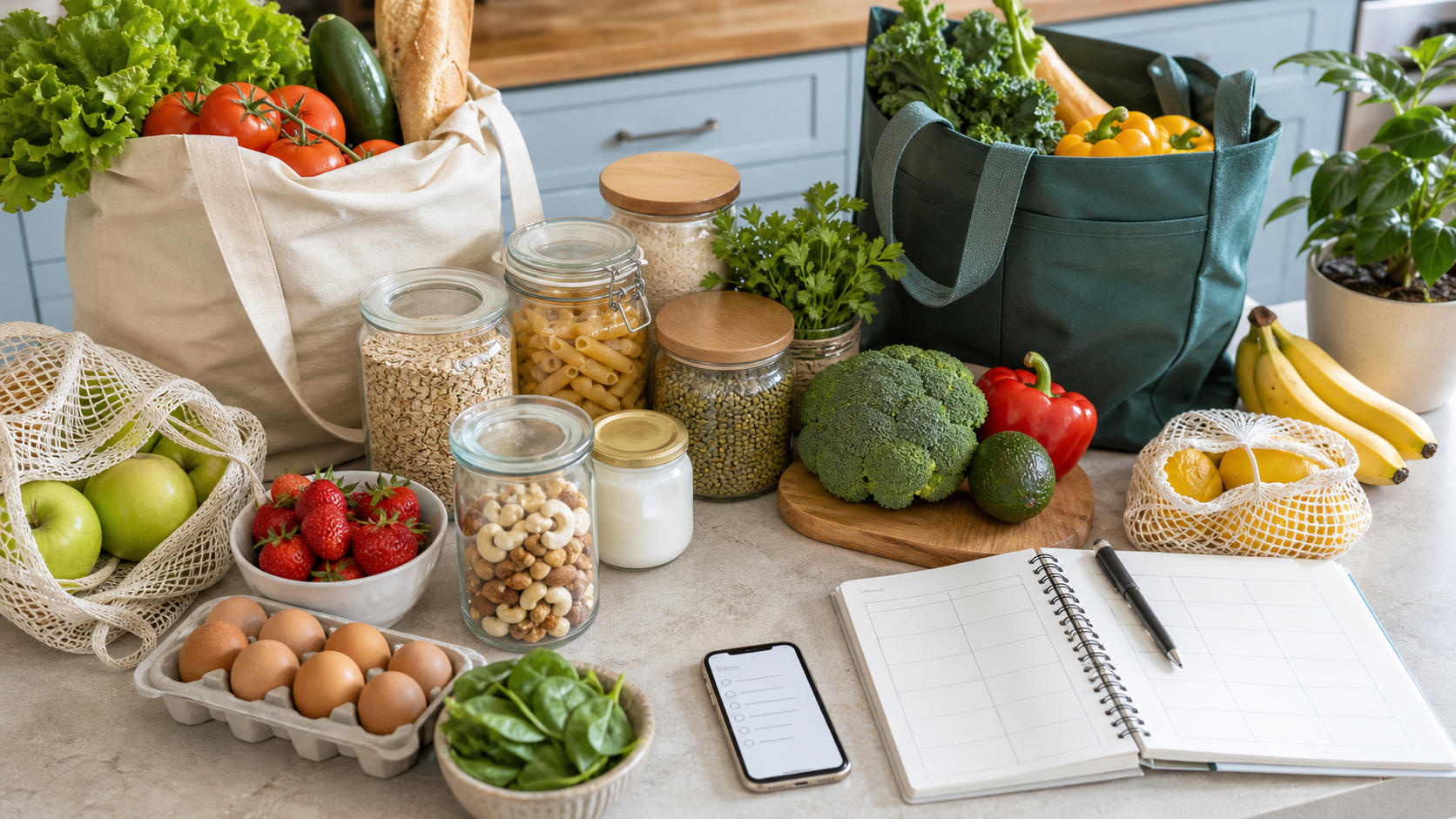
The cheapest grocery basket is not always the one with the lowest receipt. Food that spoils before it is eaten costs money twice: once at checkout and again when you replace it.
A better strategy connects shopping with the meals, schedules and storage space your household actually has.
Shop your kitchen first
Before writing a list, check the refrigerator, freezer and cupboards. Identify ingredients that need using soon and build two or three meals around them.
- Photograph shelves if you often forget what is at home.
- Keep older food near the front.
- Add a “use first” box in the refrigerator.
Plan building blocks, not a perfect week
Rigid meal plans break when work runs late or plans change. Buy flexible ingredients that can move between meals: roasted vegetables can become a side, lunch filling or pasta addition; cooked beans can work in soup, salad or wraps.
Compare unit prices with common sense
Bigger is cheaper only when you use it
Unit pricing helps compare different pack sizes, but storage and shelf life still matter. A bulk pack is poor value if half expires. Choose the size that fits your household’s realistic consumption.
- Compare drained weight for canned foods.
- Check frozen versions of produce that often spoils.
- Split suitable bulk purchases with family or friends.
Use promotions as a filter, not a shopping list
Check deals after planning what you need. A promotion is useful when it lowers the cost of a regular purchase or a genuine substitute. It is not a saving when it introduces an item you would otherwise leave behind.
Create one rescue meal
Keep ingredients for a quick, inexpensive backup meal at home. On a tiring night, pasta, eggs, frozen vegetables or a simple soup can prevent an unplanned takeaway and use items already open.
Conclusion
Grocery savings come from matching purchases to real meals and using what enters the house. Plan loosely, compare sensibly and make leftovers visible. The weekly total often falls naturally when waste does.